
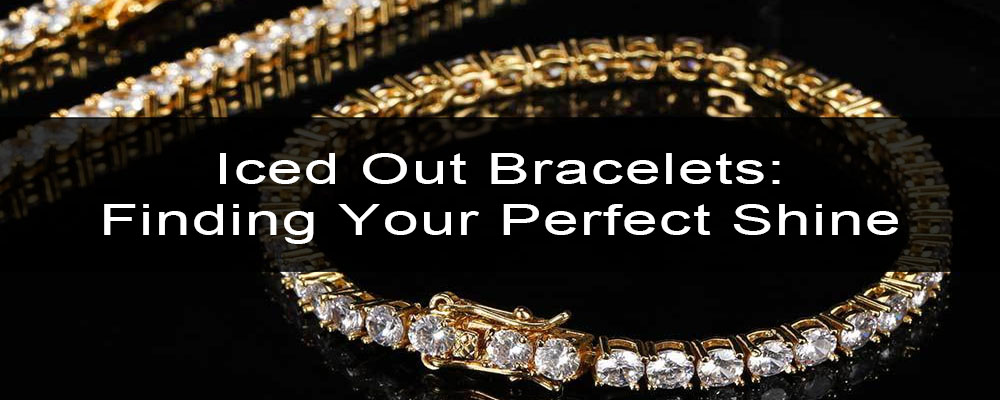
More Than Just Jewelry
In the world of high fashion, some accessories whisper while others command the room. Iced out bracelets belong firmly in the second category. What started as a bold emblem of success within hip-hop culture has evolved into a global phenomenon, transcending music videos to become a staple of modern luxury.
But “ice” is more than just a display of wealth—it’s a testament to craftsmanship and personal identity. Whether it’s the rhythmic shimmer of a classic tennis bracelet or the heavy, “flooded” links of a Cuban chain, these pieces serve as a wearable light show. They represent the moment you decided to level up.
If you’ve ever felt overwhelmed by technical terms like VVS, Moissanite, or Prong Settings, you aren’t alone. Finding the perfect shine requires balancing your personal aesthetic with a bit of technical know-how. This guide is designed to strip away the confusion, helping you navigate materials and styles so you can invest in a piece that doesn’t just look expensive—it looks like you.
The Golden Rule of Ice: A great bracelet shouldn’t just catch the light; it should reflect your journey. Let’s find the piece that speaks your language.
Defining the “Ice”: Real vs. Alternative Stones
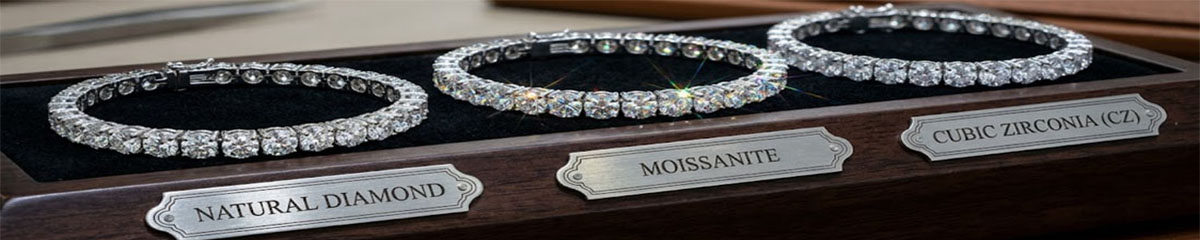
When people talk about “ice,” they are referring to the stones that give a piece its fire. However, not all sparkle is created equal. Understanding what is sitting on your wrist is the difference between making a long-term investment and buying a temporary accessory. Here is the breakdown of the most popular stones used in iced-out bracelets today:
Natural Diamonds: The Ultimate Legacy
Natural diamonds are the traditional gold standard. Formed over billions of years, they carry a prestige and resale value that alternatives can’t quite match. When shopping for natural “ice,” you’ll want to pay attention to the Four Cs: Cut, Color, Clarity, and Carat. For maximum shine in a bracelet, the Cut is the most important factor—it’s what determines how the light bounces back at the viewer.
Moissanite: The Secret Weapon of Shine
Moissanite is a total game-changer for the iced-out aesthetic. Originally discovered in a meteor crater, this stone is nearly as hard as a diamond (9.25 on the Mohs scale) but has a higher refractive index.
- The “Fire”: Moissanite actually sparkles more than a diamond, throwing off “rainbow” flashes of light.
- The Value: It is significantly more affordable and will still pass most basic thermal diamond testers, making it the top choice for those who want a “flooded” look on a budget.
Cubic Zirconia (CZ): The Entry Point
Cubic Zirconia is a synthetic stone that offers a similar look to diamonds at the lowest possible price point. While a high-grade (5A) CZ can look stunning out of the box, keep in mind that it is softer than the options above. Over time, CZ can develop scratches if not cared for meticulously.
| Stone Type | Durability (Mohs Scale) | Brilliance (Refractive Index) | Price Point |
|---|---|---|---|
| Natural Diamond | 10 | 2.42 | $$$ |
| Moissanite | 9.25 | 2.65–2.69 | $$ |
| Cubic Zirconia | 8–8.5 | 2.15 | $ |
Choosing Your Metal: The Foundation of the Shine
While the stones provide the “ice,” the metal is the architecture that holds everything together. The right metal doesn’t just complement the color of your stones; it determines how often you can wear your bracelet and how well it will stand the test of time.
When selecting your foundation, you’re usually choosing between three main paths: prestige, practicality, or price.
Solid Gold: The Timeless Choice
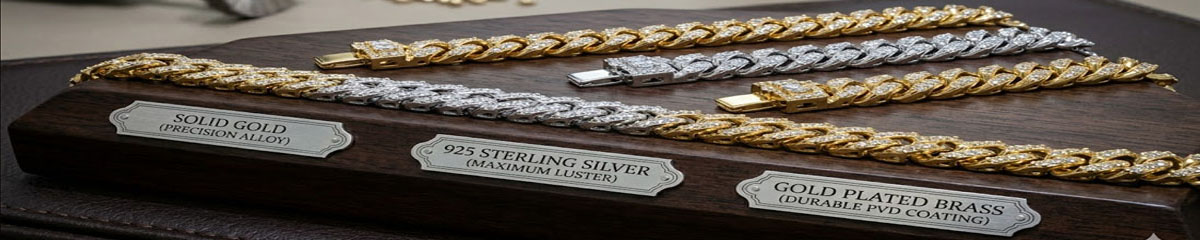
Gold is the traditional choice for high-end jewelry because it doesn’t tarnish or rust. However, pure gold (24k) is far too soft for an iced-out piece—the stones would literally fall out. Instead, jewelers use alloys:
- 10k Gold: The most durable and affordable solid gold option. Because it has a higher percentage of alloy metals, it’s harder and more resistant to scratches.
- 14k Gold: The “Goldilocks” of jewelry. It offers a rich color while remaining strong enough to keep your stones secure. This is the industry standard for high-quality iced-out gear.
- 18k Gold: Highly prestigious with a deep, buttery yellow hue, but it is softer. Best reserved for “statement” pieces rather than daily-wear bracelets.
Sterling Silver: The Brightest White
If you prefer a “white gold” look without the white gold price, 925 Sterling Silver is your best friend.
- The Look: Silver actually has a higher natural luster than white gold or platinum.
- The Maintenance: Silver can tarnish over time when exposed to air and moisture, but a quick polish brings it back to life instantly. Most high-end silver bracelets are plated in Rhodium (a member of the platinum family) to prevent tarnishing and give it a premium, mirror-like finish.
Gold Plating : Luxury on a Budget
For those who want the look of a luxury bracelet for a fraction of the cost, plating technologies have come a long way.
Gold plating is frequently applied to High-quality Brass substrates., this “Physical Vapor Deposition” process is incredibly durable. It’s resistant to sweat and water, making it a popular choice for “daily beaters” or fitness-focused lifestyles.
| Feature | Solid Gold (14k) | Sterling Silver (925) | Gold Plating |
|---|---|---|---|
| Durability | High | Moderate | Moderate (Coating wears) |
| Investment | Retains Value | Moderate | Low Value |
| Skin Sensitivity | Hypoallergenic | Usually Safe | Varies by Base Metal |
| Daily Wear | Excellent | Good | Gentle Use Recommended |
A Quick Tip: Always check the hallmarks. Look for stamps like 14k, 10k, or 925 on the clasp. If there’s no stamp, it’s a red flag for the quality of the metal beneath the shine.
Popular Iced Out Bracelet Styles
The “perfect shine” is subjective, and the style you choose says a lot about your personal brand. While some prefer a sleek, streamlined look, others want a piece that can be seen from across the street. Here are the heavy hitters in the world of iced-out wristwear.
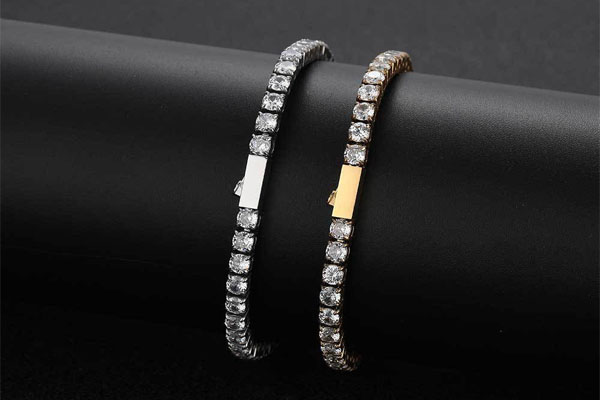
The Classic Tennis Bracelet
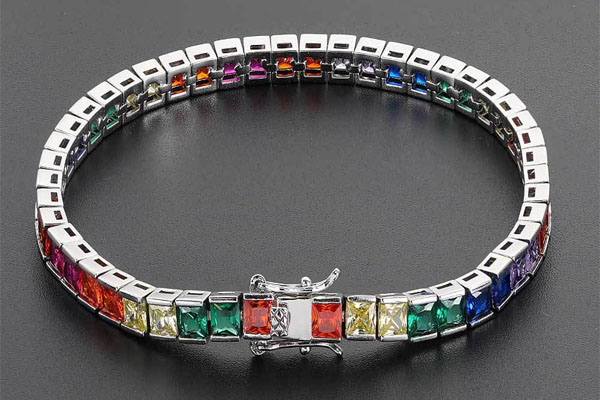
Often called the “gateway” to iced-out jewelry, the tennis bracelet features a continuous, symmetrical line of diamonds or stones.
- The Vibe: Sophisticated, timeless, and understated luxury.
- Why it Works: It is incredibly versatile. You can wear a thin 3mm tennis bracelet with a suit for a gala, or stack a 5mm version with a watch for a modern streetwear look. It’s the ultimate “clean” aesthetic.
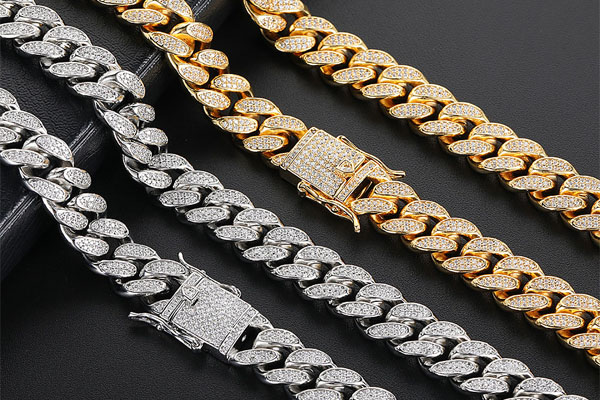
The Cuban Link (Miami Cuban)
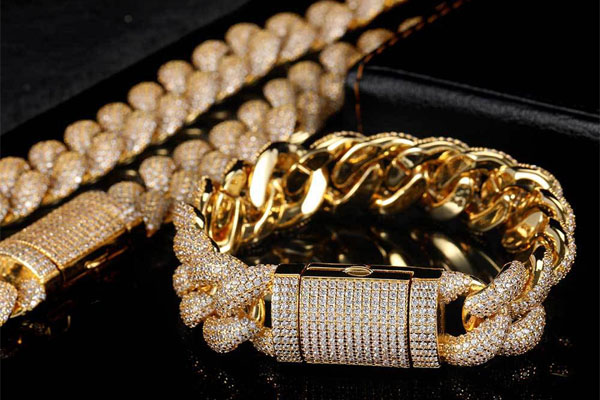
The Cuban link is the undisputed king of urban jewelry. Characterized by thick, interlocking round or oval links, the “iced-out” version usually features stones “flooded” across the surface of the links or concentrated on a massive box clasp.
- The Vibe: Bold, powerful, and unapologetic.
- Why it Works: This is a weightier piece that feels substantial on the wrist. If you want people to notice your jewelry the second you walk into a room, the Cuban link is your go-to.
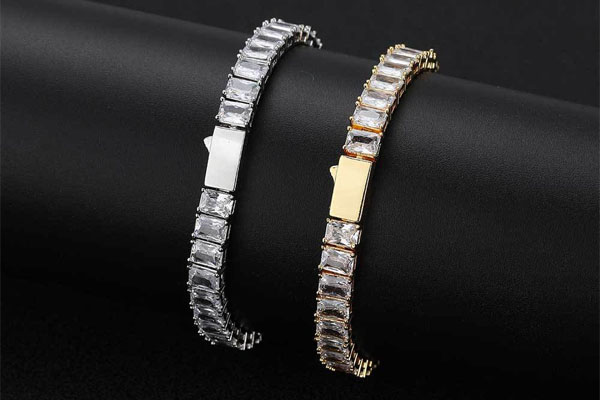
The Baguette-Cut Bracelet
Baguette stones are rectangular and “step-cut,” meaning they have long, parallel facets. Unlike the round “brilliant” cut which sparkles in every direction, baguettes offer a distinct, mirror-like flash of light.
- The Vibe: Art Deco meets modern high-fashion.
- Why it Works: Many modern iced-out bracelets mix round-cut stones with baguettes to create a multi-dimensional shine. It’s a more architectural look that stands out because it breaks away from the standard round-stone pattern.
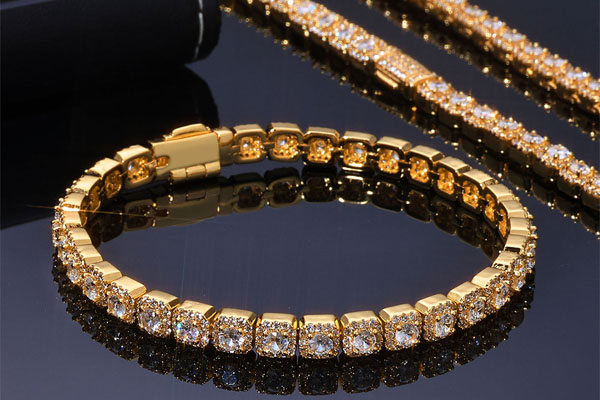
The Prong-Set Link (Cluster)
Instead of one large stone per link, cluster bracelets use several smaller stones set closely together to mimic the look of a much larger diamond.
- The Vibe: Maximum surface area “ice.”
- Why it Works: These pieces are designed to catch the light from every possible angle. Because they use a “honeycomb” or “pave” style of setting, there is very little visible metal, giving the illusion that your wrist is literally made of diamonds.
Pro Tip: If you aren’t sure where to start, the 4mm Tennis Bracelet is universally considered the most “wearable” piece for any gender or occasion. It’s a purchase you’ll never regret.
| Style | Best For… | Visual Impact | Trend Longevity |
|---|---|---|---|
| Tennis | Daily Wear / Elegance | Subtle Sparkle | Eternal |
| Cuban Link | Streetwear / Statements | High Impact | High |
| Baguette | Unique / Geometric Look | Unique Flash | Trendy/Modern |
| Cluster | Maximum “Flooded” Look | Intense Brilliance | High |
The Technical Details: Settings Matter
When you buy an iced-out bracelet, you aren’t just paying for the stones; you’re paying for the labor and precision required to keep those stones in place. The “setting” refers to how the stones are mounted into the metal. A high-quality setting ensures the stones stay secure while maximizing the amount of light that hits them.
Here are the three most common settings you’ll encounter in the world of high-end shine:
Prong Setting: The Light Magnet
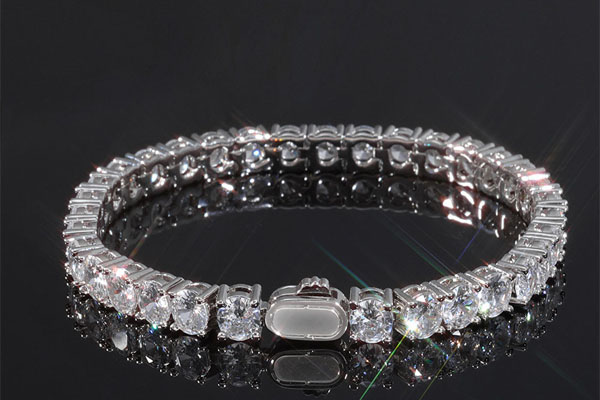
This is the most popular setting for tennis bracelets. Small metal claws (prongs) reach up and over the stone to hold it firmly in place.
- The Benefit: Because the stone is elevated and held by minimal metal, light can enter from the top, sides, and bottom. This results in the maximum possible “fire” and brilliance.
- The Look: Classic and clean. It highlights the individual shape of each stone.
Pave Setting: The “Flooded” Effect
Derived from the French word for “paved,” a pave setting involves drilling tiny holes into the metal and placing small stones into them, held by nearly invisible beads of metal.
- The Benefit: It creates a seamless field of sparkle where the metal almost disappears. This is how you achieve that “honeycomb” or “flooded” look seen on high-end Cuban links.
- The Look: Intense and textured. It makes the entire surface of the bracelet look like a sheet of ice.
Channel Setting: Sleek and Secure
In a channel setting, stones are placed side-by-side in a “track” or “channel” created by two parallel walls of metal.
- The Benefit: Since there are no prongs to snag on your clothes or hair, this is the most durable setting for an active lifestyle. It also protects the edges of the stones from chipping.
- The Look: Modern and streamlined. It’s frequently used for baguette-cut stones to create a sophisticated, “hall of mirrors” flash.
Setting Comparison Table
| Setting Type | Snag Risk | Light Reflection | Best For… |
|---|---|---|---|
| Prong | Moderate | Maximum | Tennis Bracelets |
| Pave | Low | High (Shimmer) | Cuban Links & Clusters |
| Channel | Lowest | Moderate (Flash) | Baguette & Daily Wear |
Pro Tip: When you receive your bracelet, run your finger gently over the stones. If you feel any “sharp” edges or if the stones wiggle, the setting is likely poor quality. A well-set piece should feel smooth and the stones should be perfectly level with one another.
How to Spot Quality (And Avoid “Fakes”)
In an industry where everything is designed to catch the light, it can be difficult to distinguish a high-end masterpiece from a cheap imitation. Knowing how to inspect a piece like a pro will save you from “buyer’s remorse” and ensure your investment actually lasts.
Here are the key indicators of quality to look for before you swipe your card:
The Weight Test
Genuine luxury metals like gold and silver are significantly denser than the base metals (like lead) used in “costume” jewelry.
- How to check: A high-quality iced-out bracelet should have a satisfying “heft” to it. If a thick Cuban link feels light or “plasticky” when you pick it up, it’s likely a hollow or low-quality imitation.
The “Hand-Set” vs. Glued Difference
In premium jewelry, every single stone is secured by metal (prongs or beads). Lower-quality manufacturers often use industrial glue to hold stones in place.
- The Red Flag: Look closely at the base of the stones. If you see any yellowish residue or if the stones look like they are sitting on top of the metal rather than inside a setting, walk away. Glued stones will eventually fall out, especially when exposed to water or heat.
The Clasp & Connection Points
The most overlooked part of a bracelet is the hardware that keeps it on your wrist.
- The Hallmark: Look for a clear stamp (14k, 925, etc.) on the clasp.
- The Mechanism: High-quality iced-out bracelets almost always feature a Double-Locking Box Clasp. You should hear a distinct “click” when it closes, and the side safety wings should feel tight. If the clasp feels flimsy or loose, you risk losing the entire piece.
The “Lead and Nickel” Check
Cheap jewelry often uses nickel as a base metal, which causes the infamous “green skin” reaction and can lead to painful rashes.
- The Standard: Quality jewelers will explicitly state their pieces are Lead and Nickel-free. If a brand isn’t transparent about what’s under the plating, it’s usually because they are using cheap, irritating alloys.
Styling Your Shine
Buying the bracelet is only half the battle; knowing how to wear it is where the artistry comes in. Because iced-out jewelry is such a strong visual statement, the goal is to make it look like a natural extension of your style rather than an overwhelming distraction.
Here is how to master the “shine” for every occasion.
The Power of the Watch Stack
One of the most popular ways to wear an iced-out bracelet is paired with a luxury timepiece. This is known as “stacking.”
- The Technique: Place your bracelet on the side of the watch further from your hand (closer to your elbow) to keep it from sliding over the watch face.
- The Rule of Proportions: If you have a large, “iced” watch, pair it with a thinner 3mm or 4mm tennis bracelet. If your watch is a clean, classic stainless steel model, you can go bolder with a baguette or Cuban link to add contrast.
Mixing Metals: Breaking the Rules
The old fashion rule that you “cannot mix gold and silver” is officially dead. In the modern jewelry world, mixing metals creates a sophisticated, curated look.
- How to do it: If you’re wearing a white gold (silver-toned) iced-out bracelet, try pairing it with a yellow gold ring or chain. The key to making this look intentional is to have at least one other accessory that matches the “secondary” metal color so the palette looks balanced.
Dressing for the Occasion
- Daytime/Casual: Keep it to a single piece. A lone tennis bracelet paired with a high-quality white tee and denim creates an “effortless luxury” vibe.
- Evening/Formal: This is your time to layer. Don’t be afraid to stack two different textures—like a round-cut tennis bracelet and a baguette-cut link—to create a multi-dimensional sparkle under dinner lights.
Balance Your “Points of Light”
To avoid looking like you’re wearing a costume, follow the “Rule of Three.” Try to limit your high-shine pieces to three visible areas: your wrist, your neck, and perhaps a ring or earrings. If you have an iced-out watch and two bracelets on one arm, keep the rest of your outfit and accessories minimal to let the jewelry remain the focal point.
Pro Tip: If you’re wearing long sleeves, ensure your cuff sits just above the bracelet. There is nothing less stylish than “ice” that is constantly getting snagged or hidden by a hoodie sleeve. Let it breathe!

Keeping the Sparkle Alive
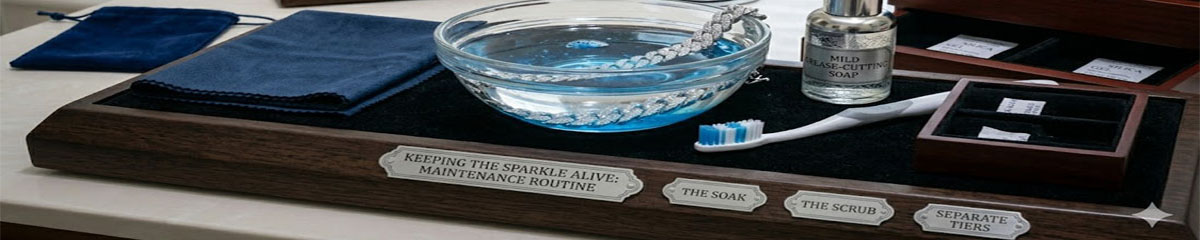
Even the most expensive diamonds will look dull if they are covered in a layer of dust, skin oils, or lotion. Because iced-out bracelets have so many tiny crevices between the stones and prongs, they act as magnets for buildup. To keep your “ice” looking like it just came out of the jeweler’s showcase, you need a consistent maintenance routine.
The At-Home Cleaning Ritual
You don’t need professional chemicals to restore your shine. In fact, most jewelers recommend a gentle approach:
- The Soak: Fill a small bowl with warm (not boiling) water and add a few drops of mild, grease-cutting dish soap. Let your bracelet soak for 10–15 minutes.
- The Scrub: Use a new, soft-bristled toothbrush to gently scrub the stones. Pay extra attention to the back of the settings, as that’s where sweat and oils usually accumulate.
- The Rinse: Rinse thoroughly under lukewarm running water. (Pro tip: Make sure the sink drain is closed!)
- The Dry: Pat dry with a lint-free microfiber cloth. Avoid paper towels, which can leave tiny fibers caught in the prongs.
The “Last On, First Off” Rule
Chemicals are the enemy of brilliance. Perfumes, colognes, hairsprays, and lotions contain oils and alcohols that can film over stones or even erode the plating on silver and vermeil pieces.
- Last On: Put your bracelet on only after you’ve applied your fragrance and grooming products.
- First Off: Take your jewelry off as soon as you get home to avoid unnecessary wear and tear.
Storage is Key
Diamonds are the hardest natural substance on earth, which means a diamond bracelet can easily scratch your gold watch or a different gemstone piece.
- Separate Tiers: Store your bracelets in individual soft pouches or separate compartments in a jewelry box.
- Moisture Control: If you live in a humid climate, throw a small silica gel packet in your jewelry box to prevent sterling silver from tarnishing prematurely.
A Quick Warning: Never wear your iced-out jewelry in a swimming pool or hot tub. The chlorine can weaken the metal alloys and dull the finish of both the stones and the setting. When in doubt, keep it dry!
Your Signature Piece
Choosing an iced-out bracelet is about more than just adding a spark to your wrist—it’s about selecting a piece that reflects your personality and the milestones you’ve achieved. Whether you’ve decided on the timeless elegance of a natural diamond tennis bracelet or the bold, high-energy flash of a Moissanite Cuban link, your choice is a signature of your individual style.
The “perfect shine” isn’t defined by the price tag, but by the confidence it gives you when the light hits it. By understanding the nuances of stone quality, metal durability, and proper maintenance, you’re no longer just a shopper; you’re a collector. You now have the tools to look past the surface shimmer and invest in a piece that will retain its brilliance for years to come.
As you head out to find your next favorite accessory, remember that jewelry is the ultimate form of self-expression. Don’t be afraid to experiment with stacks, mix your metals, or go for that “flooded” look you’ve always wanted. After all, life is too short to wear jewelry that doesn’t make you feel like the best version of yourself.
The Professional Edge: Sourcing via Ice Distro Wholesale
For those looking to transition from a collector to a curator, the path to success lies in high-volume, high-quality sourcing. Ice Distro Wholesale serves as the bridge between industry-standard manufacturing and the retail market, offering an elite selection of iced-out jewelry at scale.
The Wholesale Advantage
Choosing a wholesale partner like Ice Distro isn’t just about lower price points—it’s about consistency and reliability.
- Quality Control: Every piece in the wholesale catalog undergoes rigorous inspection to ensure stone alignment and clasp security meet professional standards.
- Diverse Inventory: From 925 Sterling Silver bases to 14k Gold PVD plating, wholesalers provide a spectrum of materials to suit different market tiers.
- Scalability: Whether you are stocking a boutique or launching an online brand, wholesale access allows you to maintain a deep inventory of “hot” styles like the 12mm Cuban or the 4mm Tennis.
Why Professionals Choose Ice Distro
Success in the jewelry business is built on trust. Ice Distro provides the transparency needed to sell with confidence, offering detailed specifications on stone types—ranging from premium AAAAA CZ to high-refractive Moissanite. By sourcing wholesale, you ensure that your “shine” is backed by professional craftsmanship and a competitive edge in the luxury market.
Request OEM Service
Feel free to get in touch with us via this contact form. Our consultant will get back to you within 24 hours